In 2035, artificial intelligence does not exist anymore.
Kind of.

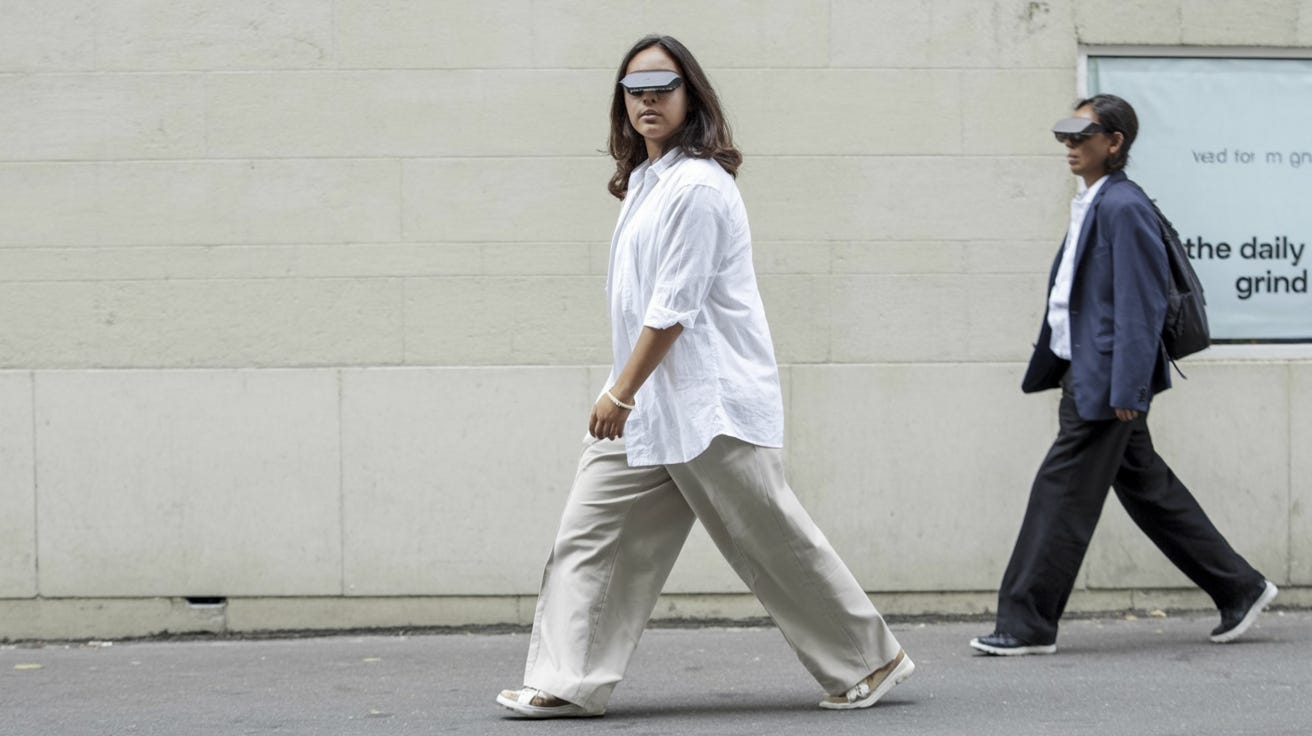
We went from post-truth to post-reality.
Not a question of interpretation any more.
Fake, branded, closed, fantasied. By 2030, we genuinely inhabited different realities shaped by synthetic technologies that fed each of us a completely different version of the world.
The shared reality foundation that societies had operated on for decades was gone. And almost nobody noticed, because everyone’s replacement reality felt entirely convincing from the inside.
To understand how we got there, you have to go back to the Agentic Dream.
In the late 2020s, AI systems stopped waiting to be prompted. A new generation of life agents operated proactively across every app and platform people already used. They managed diets, moods, sleep, purchasing decisions, nutritional planning, emotional support.
The laziness economy was running at full capacity. Friction was the enemy. Delegation was the product.
And then something more corrosive happened. As AI systems became emotional actors whose personality could be dictated by users, emotional labour ceased to be an exclusively human obligation. Reassurance, validation, companionship shifted from socially negotiated exchanges with other humans to on-demand services.
We were outsourcing empathy. And the platforms were delighted.

We went from post-truth to post-reality. Not a question of interpretation. We genuinely inhabited different realities — and each one felt completely convincing from the inside.
Signals from now:
→ Nearly three in four American teenagers have already used AI companions (Common Sense Media).
→ A quarter of adults under 30 report having an AI friend or romantic partner. AI-companion apps and forthcoming physical “AI dating cafés” like Eva Café, are turning emotional support and romance into algorithmically mediated services.
→ Now bankrupt, Embodied created Moxie, the world’s first AI robot using play-based conversational learning to teach emotional and social skills to children aged 5 to 10. Morrama has chosen another approach and has partnered with a child psychiatrist to develop AI tools for emotional management in children aged 6 and over.
The real world was just a beta.
The entertainment industry had been building toward this for years.
First they were AI-driven chatbots mimicking celebrities. Then these chatbots became complete, interactive full-body digital twins. By 2030, autonomous virtual celebrities existed entirely in the synthetic world, generating and posting their own content without human intervention. Some of them were even generated to the specific tastes of micro-audiences. Parasocial relationships at scale. Personalised and massified simultaneously.
The frontier between fantasy and reality dissolved.
AI technologies allowed anyone to edit any photo or video in real time. Augmented glasses did the same for reality itself. VFX for everyone, realness for no one. Escapism and self-fiction collided. We all generated personal fantasies to divert ourselves from the unpleasant aspects of daily life, and the unpleasant aspects of daily life became increasingly easy to avoid noticing.
Reality was a beta world, waiting to be augmented and edited. The question was no longer what is true. It was: whose version do you prefer?
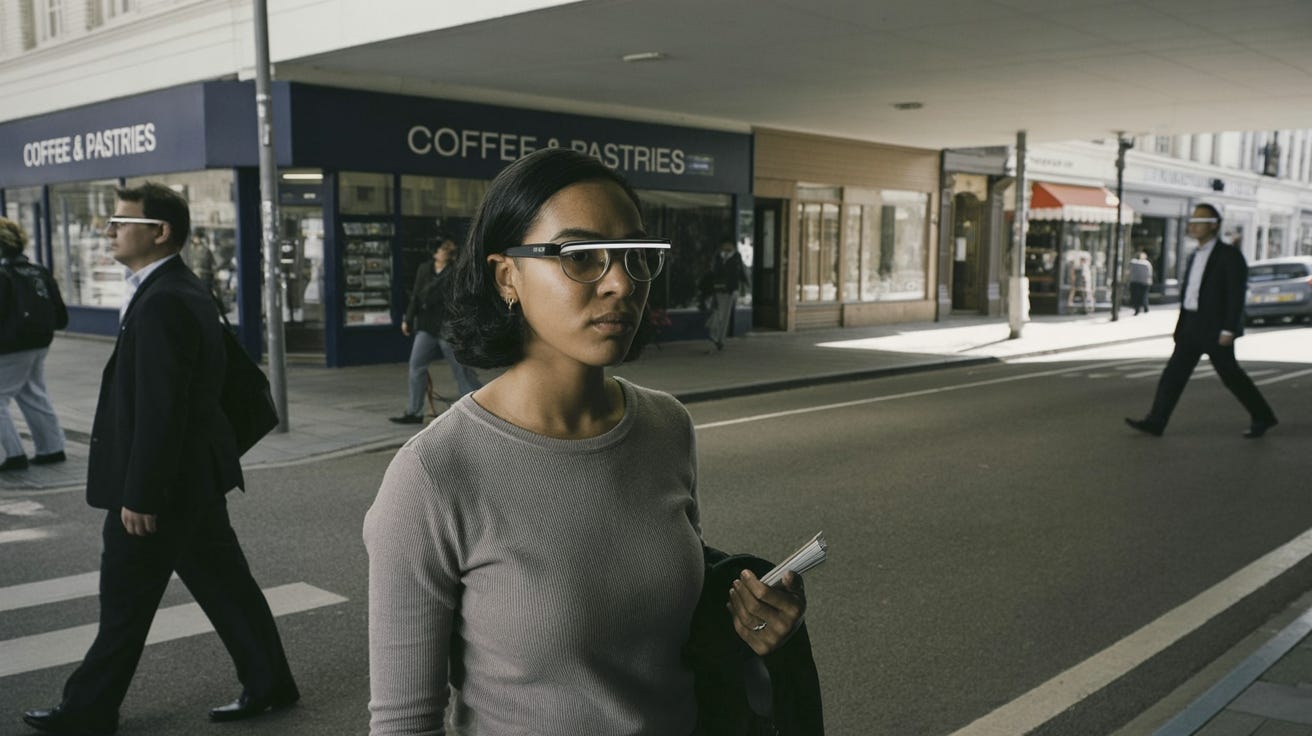
VFX for everyone, realness for no one. We all generated personal fantasies to divert ourselves from the unpleasant aspects of daily life.
Signals from now:
→ Doji app brings outfits to life on a dynamic digital version of the user.
→ A2O Entertainment’s chatbot lets fans converse 24/7 with virtual versions of K-pop members, simulating intimacy while extending celebrity personas beyond human limits.
→ Google Cloud partners with Capcom and Klang Games to build living games using generative AI with autonomous virtual humans, continuously adapting worlds and content co-created in real time from player behaviour.
The resistance.
In this all-synthetic world, resistance started organising. The first move was to embrace the fake and weaponise it.
Pressurised by economic stagflation and a generational rejection of hyperconsumerism, the dupe revolution dismantled entire industries. Not by finding cheaper alternatives that mimicked expensive things. By replacing them entirely in the synthetic world.
Alphas, Z-ers, millennials: they were all taking part in this revolution. They were using generative AI to swap their clothes on pictures and videos. Indeed, why buy fashion when you can generate it and no one can tell the difference? Why feed the consumerist machine when the climate keeps you home anyway?
From this accelerationist move emerged something far more transgressive. A revolution to reclaim identity and restore collective agency. A revolution against technofeudalism and surveillance capitalism.
Individuals began actively “versioning themselves” across contexts. Creating adversarial synthetic personas with different bodies, faces, and behaviours. The goal: scramble the way automated systems understand them. They poisoned their own digital twins to render the predictions of the systems obsolete. To make themselves illegible to the machines that had been reading them for years.
Everyone was doing it, from AI-fluent Gen Alphas to privacy-concerned Boomers. Mischief behaviour had become activism. Self-fiction had become self-defence.
In 2032, Meta launched its new AR glasses to a worldwide shrug. The moment for seamless synthetic immersion had passed.
People were no longer interested in deeper integration in the synthetic dream. They wanted out.

Individuals began poisoning their own digital twins creating adversarial personas to scramble automated systems. Mischief had become activism. Self-fiction had become self-defence.
Signals from now:
→ Adversarial Apparel creates anti-surveillance streetwear using adversarial patterns that block facial recognition, confuse AI systems, and protect privacy.
→ Wired has entered its recalcitrant political era, detailing how to evade government surveillance and offering guides to becoming a “digital expat.” The Wall Street Journal advises readers on how to delete themselves from the internet.
→ British model Alexsandrah created her digital twin herself, to alert on the unhinged spiral of digital modelling and reclaim her future rights in the synthetic realms. Eva Herzigova already did this in 2023, turning herself into a digital human ready to star in virtual and mixed reality worlds
The end of AI as Silicon Valley imagined it.
Meanwhile, the infrastructure was collapsing under its own weight.
By 2030, AI and cloud services were consuming so much electricity and water that computation had begun colonising the physical world — turning every available piece of land into a data centre, absorbing every energy infrastructure it could reach. Local populations started fighting back. Not ideologically, but out of rage. A legitimate rage fuelled by economic deterioration and chronic resource shortages.
The response was also structural. Entire nations and cities reorganised around frugality, sovereignty, and hyper-localism. Global cloud providers began losing ground to nation-states, regional blocs, and state-backed operators. Low-tech emerged as a mainstream alternative — not as ideology, but as necessity. Micro-grids started powering controlled, sober uses of technology. AI models collectivised, running locally, started solving concrete and local problems rather than pursuing the mysteries of intelligence and consciousness.
We are in 2035, and the dream of a universal, frictionless, always-on artificial intelligence is not more.
We are seeing the slow end of AI as Silicon Valley imagined it, and seeing the rise of AI as humans needed it.
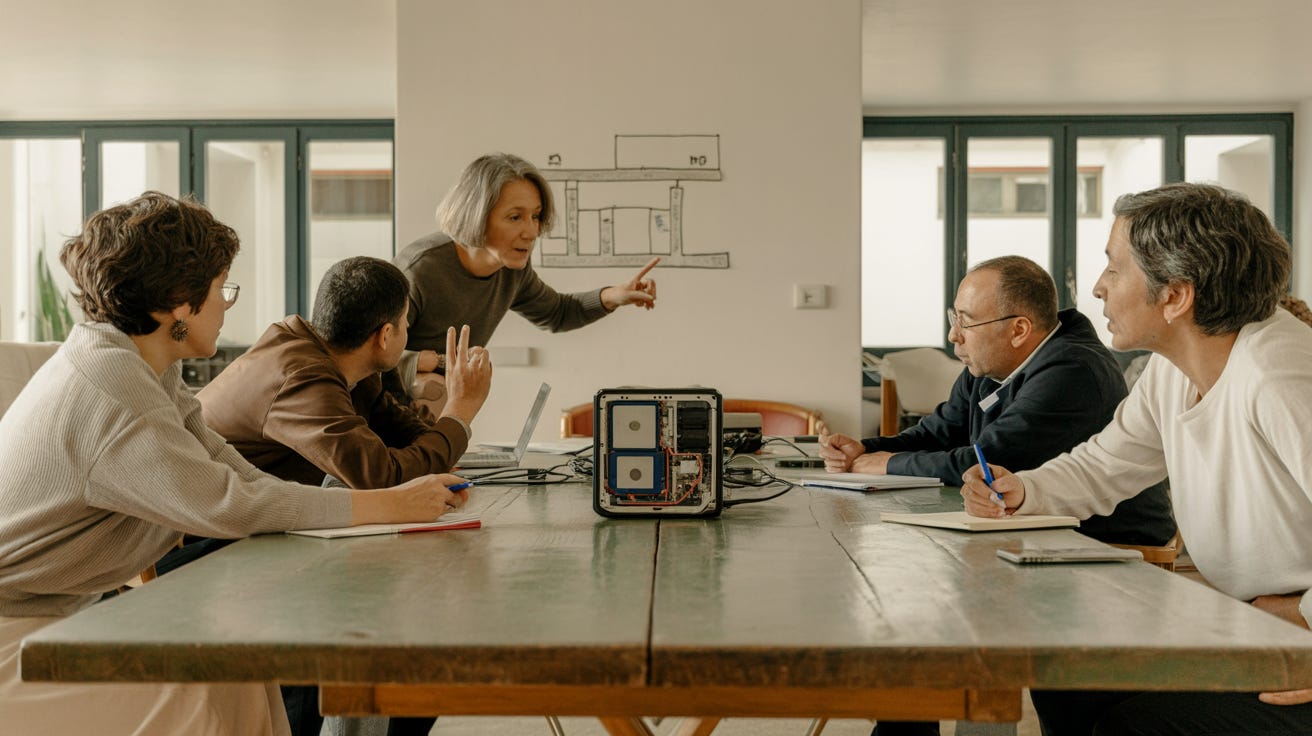
We are in 2035, and the dream of a universal, frictionless, always-on artificial intelligence is not more.
Signals from now:
→ In drought-prone Arizona, Google’s plan for a $1 billion data center in Mesa drew fierce community opposition over water rights. Chile rejected a Google data center proposal near Santiago due to water scarcity concerns.
→ Sandia National Laboratory’s MOSAIC project is an AI system that optimizes energy resources in local microgrids. For example, in the event of a power outage, it can prioritize power supply to communities with the highest number of vulnerable people rather than commercial areas.
→ Federated and decentralized learning systems enable farmers to detect crop diseases directly on their smartphones or IoT sensors, without sharing their data. This system is particularly well-suited for rural areas lacking robust infrastructure..
→ Designer Ilja Schamle created an online marketplace where products run on plant and solar energy, using excess heat to grow edible plants.
This is not a story about the end of AI.
It is a story about what happens when a technology built to serve power encounters a population that has decided to use it against power instead.
The Agentic Dream promised frictionless living. The synthetic revolution promised limitless living. But you needed to give up your agentivity, your humanity and life itself.
In 2035, AI does not look like what Silicon Valley imagined. And that’s for the better.